Vetem.org

OUR TEAM

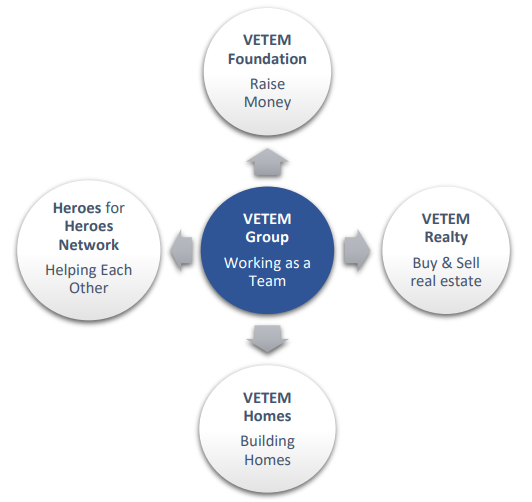
It Takes a Team

GET INVOLVED WITH VETEM FOUNDATION

Join our community of fundraisers.


What Your Donations Does

✔ Land acquisition and development to build new modular housing
✔ Purchase and Renovation existing housing to create safe modern living spaces.
✔ Purchase and install ADUs as rentals to earn rental income to support their low military salaries.
✔ Install Solar to reduce energy costs as well as promote sustainability.
✔ Acquire rental communities to convert into affordable and sustainable military housing

What The VETEM Foundation Do

The Foundation helps fund its Housing Initiative through fundraising efforts, government grants,
and generous donations. These donations help us provide home ownership opportunities for
our men and women in uniform who continuously put their lives on the line so we may have
freedom. 

We at VETEM Foundation believe with conviction, that those who had put and are putting their
lives on the line to serve and protect our nation deserve not just gratitude, but appreciation
through action. 

Our unique Housing Program provides both homeownership and financial wealth and
independence through rental income, guaranteeing their futures.

Our Housing Program

Our Housing Process

Our Home Building Process

Home Buying Process

Apply For Housing

Our housing Program provide not only secure housing but also a pathway to lasting economic
wellbeing, sustainability and stability for militaries and their families.
These solutions provide them with opportunities for financial growth, ensuring they have the
resources they need to thrive long term.

Applying For a Loan

Key Tips:

• Do NOT make major financial changes before considering applying for a home loan
• Don’t open new credit cards, take out a car loan, or make large, unexplained deposits into your
bank accounts.
• Shop around, don’t just go with the first lender you find. Compare rates and fees.

Getting Started

1. Check Your Financial Health: 

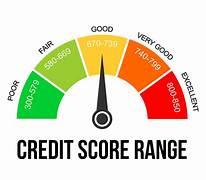
o Credit Score: Lenders use this to determine your interest rate and eligibility. A higher score
gets you better rates. Obtain a copy of your credit report from all three bureaus (Equifax,
Experian, TransUnion).
o Debt-to-Income Ratio (DTI): Most lenders prefer a DTI below 43%. Calculate your monthly
debt payments (car loans, student loans, credit cards) divided by your gross monthly income.
o Savings: Ensure you have enough for a down payment (typically 3%-20% of the home’s
price) plus closing costs (typically 2%-5%). 

2. Get pre-approved: 

o A pre-approval is a lender’s conditional commitment to loan you a specific amount based on
a verified review of your finances (credit, income, assets).
o Why it’s crucial: It shows real estate agents and sellers that you are a serious, qualified
buyer. It makes your offer much stronger in a competitive market. We recommend getting an
underwriter’s approval rather than just a lenders pre-approval letter. 

o What you’ll need: W-2s, pay stubs, bank statements, and tax returns for the last two years.
o Result: You receive a pre-approval letter stating the loan amount you qualify for. It is best to
get underwriter approved.

Fixing Your Credit

About Credit Scores:

FCRA, the Fair Credit Reporting Act, requires creditors to furnish you with a free copy of your credit report
upon request. You are entitled to one free report per week from each bureau, (Equifax, Experian, TransUnion).
Lenders use this to determine your interest rate and eligibility. A higher score gets you better rates. 

What To Do
1. Get your free official credit report: from all three bureaus (Equifax, Experian, and TransUnion.
Go to www.AnnualCreditReport.com). This is the only officially authorized site. 

2. Check Your Reports for Errors: Go through each report line by line. Look for: 

o Incorrect Account Information: Accounts that aren’t yours, incorrect balances, or wrong
credit limits. 

o Inaccurate Negative Items: Late payments that you believe you paid on time.

o Outdated Information: Negative items that are more than 7 years old (or 10 years for
some bankruptcies). They must be removed by law.
o Duplicate Accounts: The same debt listed multiple times, especially in collections.
o Inquiries You Don’t Recognize: Hard inquiries from lenders you never applied to.
3. Dispute Errors with the Credit Bureaus:
o For each error you find, file a formal dispute in writing with the specific credit bureau
(Equifax, Experian, TransUnion). You can often do this online, but sending a certified mail
dispute letter is often most effective.
o Be specific: Clearly identify the item, state why it is inaccurate, and request its deletion or
correction. Include copies (NOT originals) of any supporting documents.
o The credit bureau then has 30-45 days to investigate your claim by contacting the data
furnisher (the lender/collector). 

4. Dispute Directly with the Furnisher: 

o You can also send a dispute letter directly to the company that provided the inaccurate
information to the credit bureau (e.g., the bank or collection agency).
o This creates a second line of attack. If the furnisher confirms the information is wrong, they
must notify all three credit bureaus to correct it. 

5. For accurate negative items (like collections accounts): 

o If the negative item is legitimate, your best strategy is often a “Pay-for
Delete” negotiation.
o Contact the collection agency and offer to pay the debt (or a settled amount) in
exchange for them completely removing the collection account from your credit reports. 

6. Establish Positive Payment History: 

o Your payment history is the biggest factor in your FICO score (35%), so, pay every bill on
time, every time.
o Set up autopay for at least the minimum payment to ensure you’re never late. 

7. Lower Your Credit Utilization: 

o This is the second most important factor (30%). This is the ratio of your credit card
balances to your credit limits.
o Aim to keep your utilization below 30%, and ideally below 10%.
o You can lower it by paying down balances and/or asking for credit limit increases (but only
if you aren’t tempted to spend more). 

8. Become an Authorized User: 

o Ask a family member with a long, positive credit history and low credit card balances to
add you as an authorized user on their account. Their good history can be imported onto
your credit report. 

9. Consider a Secured Credit Card: 

o If you can’t get a traditional card, a secured card (where you make a cash deposit as
collateral) is an excellent tool to build positive payment history.
• Credit Repair Scams: Any company that guarantees to erase accurate negative
information, asks for payment upfront, or tells you not to contact the credit bureaus
directly is a scam. (This is what the earlier “FIO SORE” strategy falls under).
• Disputing Accurate Information: Filing frivolous disputes on items you know are
accurate is a waste of time and can be considered fraudulent.
• “Credit Sweeps” or “New Identity” Schemes: These are illegal and can result in
serious penalties.
“Credit Cleaning” Process: What to AVOID 

The real “FICO cleaning process” is a methodical legal strategy of:
1. Identifying and disputing inaccuracies in your reports.
2. Negotiating the removal of accurate negatives where possible (Pay-for-Delete).
3. Building new, positive credit habits to outweigh past mistakes.
This is not a quick fix, but with diligence, it is the most effective way to genuinely improve your
financial standing and your FICO score.

The Effect of Your Financial Behavior on Your Credit

OUR TEAM

VETEM Foundation. The fundraising Arm of the VETEM Group, led by women for
heroes. This includes high ranking retired women military generals bringing a wealth
of knowledge to the table. The foundations raise funds to support its Housing Initiative
in providing owner-occupied residential income housing to financially support the long
term economic stability of militaries, veterans, and military their families.

The HEROES for HEROES Hub
A national military-exclusive
network bridging talent,
expertise, and opportunity,
uniting active-duty service
members, veterans, spouses,
and military families.
Showcasing Skills – Highlight
their professional expertise
beyond service. Forging
meaningful Connections –
Collaborate with like-minded
professionals. Launching
Ventures – Explore
entrepreneurship with trusted
support

VETEM Homes. The home
builder Arm of the Group.
Building affordable and
sustainable housing solutions
for our military and their
families. Connecting military
families with expert military
real estate professionals and
lenders to assist with their
housing needs as they better
understand the unique needs
of the community

VETEM Realty. The real estate brokerage Arm of the Group, serving as both
the Buyer and Seller in real estate transactions to ensure seamless, guaranteed
transactions. Handing over the homes to VETEM Homes for renovations and ADUs
additions, then selling the primary homes only to qualified military homebuyers. The
ADUs are donations from the VETEM Foundation. Our unique model provides speed,
deal-certainty, competitive offers, and structured support backed by the strength
of the VETEM Group.